
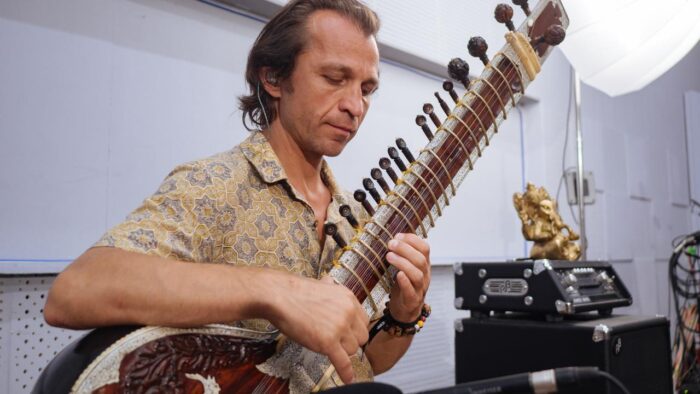
Nearly two decades ago, Stepan Christanov was living what he describes as a predictable, structured life in Russia. Trained as an engineer, he worked a conventional office schedule - Monday to Friday, nine to six. Music was not yet his profession, nor even his central pursuit.
Everything changed when he encountered the sound of sitar maestro Pandit Ravi Shankar.
“My Indian music journey started in Russia,” Stepan recalls. “When I began listening to Pandit Ravi Shankar, I realized this music carries so much emotion. It was something very deep. At that time, I only wanted to learn a little. I never imagined it would transform my whole life.”
A One-Day Visit to Varanasi
Stepan first traveled to India intending to stay only a few weeks. His visit to Varanasi was meant to last just one day before continuing south.
But a poster changed everything.
“I saw an announcement about a concert by Pandit Shivnath Mishra,” he says. “I asked people who he was. They told me he was a respected musician living in Varanasi and that I could try meeting him.”
He went to see the guru with no expectations. “I told him, ‘I have only one day here. Can you teach me something?’ He said, ‘Yes, I can teach you—but you must stay for a long time.’”
That moment became decisive.
“I dropped my train ticket. I told him, ‘Okay, I will stay.’ I came for one day. I stayed six months. That is how my musical journey truly began.” Since then, Stepan has returned to India almost every year to continue studying within the guru–shishya parampara.
Learning in the Traditional Way
Unlike many contemporary students who rely on online platforms, Stepan’s training has been entirely in person.
“I never had Zoom classes with my Guruji. Always I go to his house, touch his feet, and learn directly. Indian classical music is oral. You learn by listening, by observing, by absorbing.”
For him, the most profound revelation was understanding that in Hindustani classical music, everything begins with the human voice. “In Indian music, especially in the Hindustani tradition, all music starts from vocal. First there is vocal music. Instrumental music is a continuation of vocal music.”
He explains that his lessons often unfold through singing rather than demonstration on the sitar. “Sometimes my Guruji teaches only by singing. He sings a phrase, and I try to reproduce it exactly on the sitar. So in reality, all music is vocal music - even when you play an instrument.” The lineage itself reflects this philosophy.
“Even my Guruji’s teacher was a vocalist. He did not play sitar. He only sang. That is very important. The instrumental tradition comes from the vocal tradition.” For Stepan, this approach transformed his understanding of sound. “You are not just playing notes,” he says. “You are expressing breath, emotion, life.”
Raga as Living Experience
When asked about his favorite ragas, Stepan resists naming just one.
“It doesn’t matter which raga. The most important thing is how you unfold it - how you understand it.”
In his early years, he studied Raga Yaman intensively. More recently, he has been working with night ragas. “But any raga can become your favorite,” he explains, “if you truly understand how to develop it.” For him, raga is not a scale but a living architecture of emotion.
Beyond Music: Yoga and Meditation
Stepan's transformation in India was not limited to music.
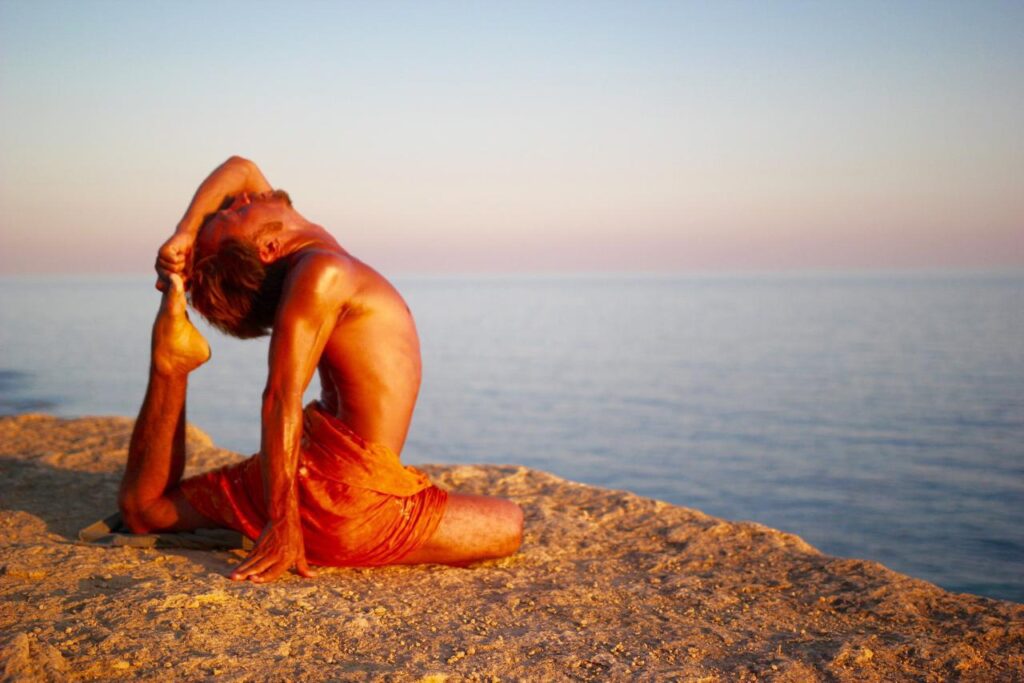
“When I first came, my body and mind were not in good condition,” he admits. “I knew nothing about meditation, nothing about yoga. I came only for a vacation.” Instead, he immersed himself completely.
“I began practicing yoga every day. I learned meditation, including Vipassana. I was hungry for knowledge. Music, yoga, meditation - every day, nonstop.” Gradually, these disciplines reshaped his life. When he returned to Russia, he began teaching yoga and developing musical projects inspired by his Indian experience.
“Slowly, I left my office job,” he says. “For the last fifteen years, I have lived only through what I received in Varanasi.” He describes the city not simply as a place of study but as a turning point in destiny. “Varanasi completely changed my karma and my lifestyle. From a boring office routine, I moved to music, travel, concerts, and cultural projects. It became like my second hometown.”
Bridging Musical Worlds
Stepan’s academic background is in international relations, where he studied cultural diplomacy and soft power. Music became his practical expression of that theory.
“I realized culture is a bridge between countries,” he explains.
In Russia and Europe, he has collaborated with orchestras and institutions including the Bolshoi Theatre, working to connect Western orchestral systems with Indian classical traditions.
The challenge, he says, lies in structural differences.
“European musicians rely on written scores. They play what is on the paper. Indian musicians rely on improvisation and oral transmission. These are two completely different systems.”
His role has often been to serve as translator between these worlds - artistically and philosophically.
“I have knowledge of Indian classical music and European classical music,” he says. “So I try to connect these two universes.”
His fusion projects combine Russian folk instruments, Indian ragas, and sometimes African or European elements.
“Music is a universal language,” he reflects. “It should unite people.”
Between Student and Performer
Despite his international collaborations, Stepan remains humble about his position in India.
“In India, I am not a performer. I am a student,” he says. Yet his cross-cultural work continues to expand. He plans tours in India featuring Russian and Indian folk collaborations, and he hopes to create performances with Indian classical dancers along the ghats of Varanasi.
“When I feel tired from composing,” he says, “I go to the Ganga, sit near a temple for five or ten minutes. That is enough. Then I continue my work.”
A Life Rewritten
Looking back, Stepan sees a clear dividing line in his life: before Varanasi and after Varanasi.
“I came as an engineer with a ticket for one day,” he says. “I left as a student of music. And I am still that student.”
For him, the sitar is not merely an instrument - it is a continuation of voice, lineage, and lived experience.
And it all began with listening.
More on Stepan Christanov at: https://www.stepanchristanov.com
Instagram: @stepan_christanov