
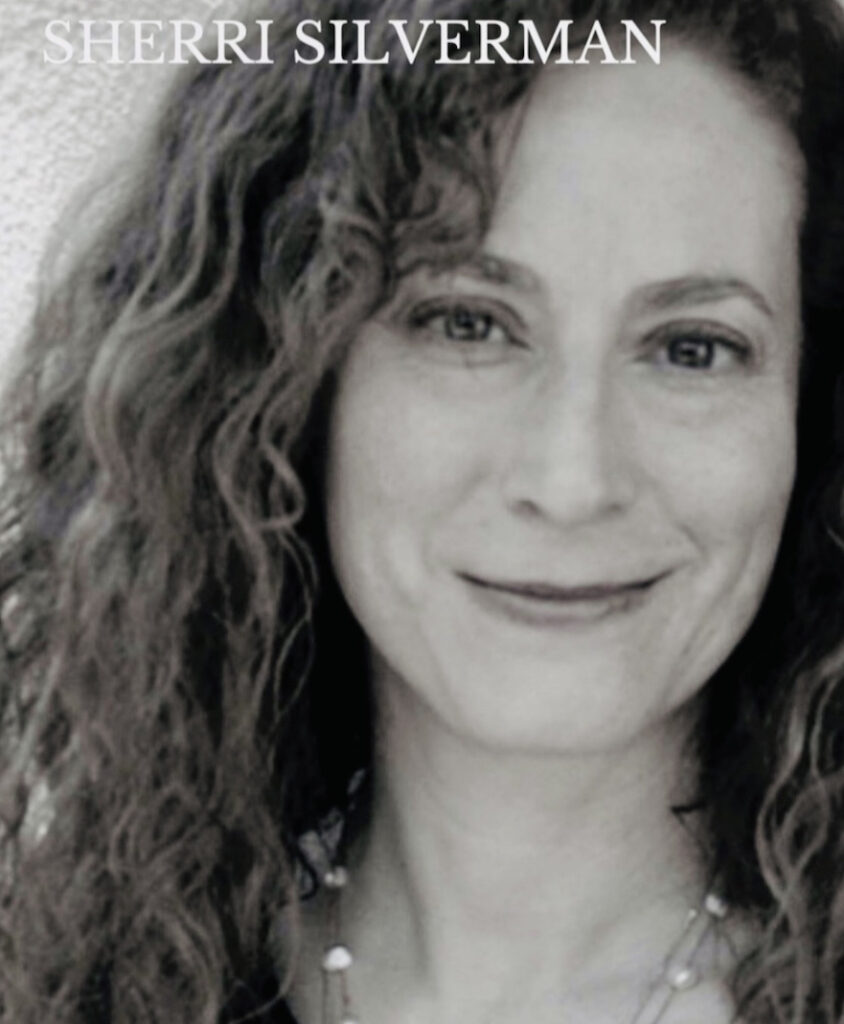
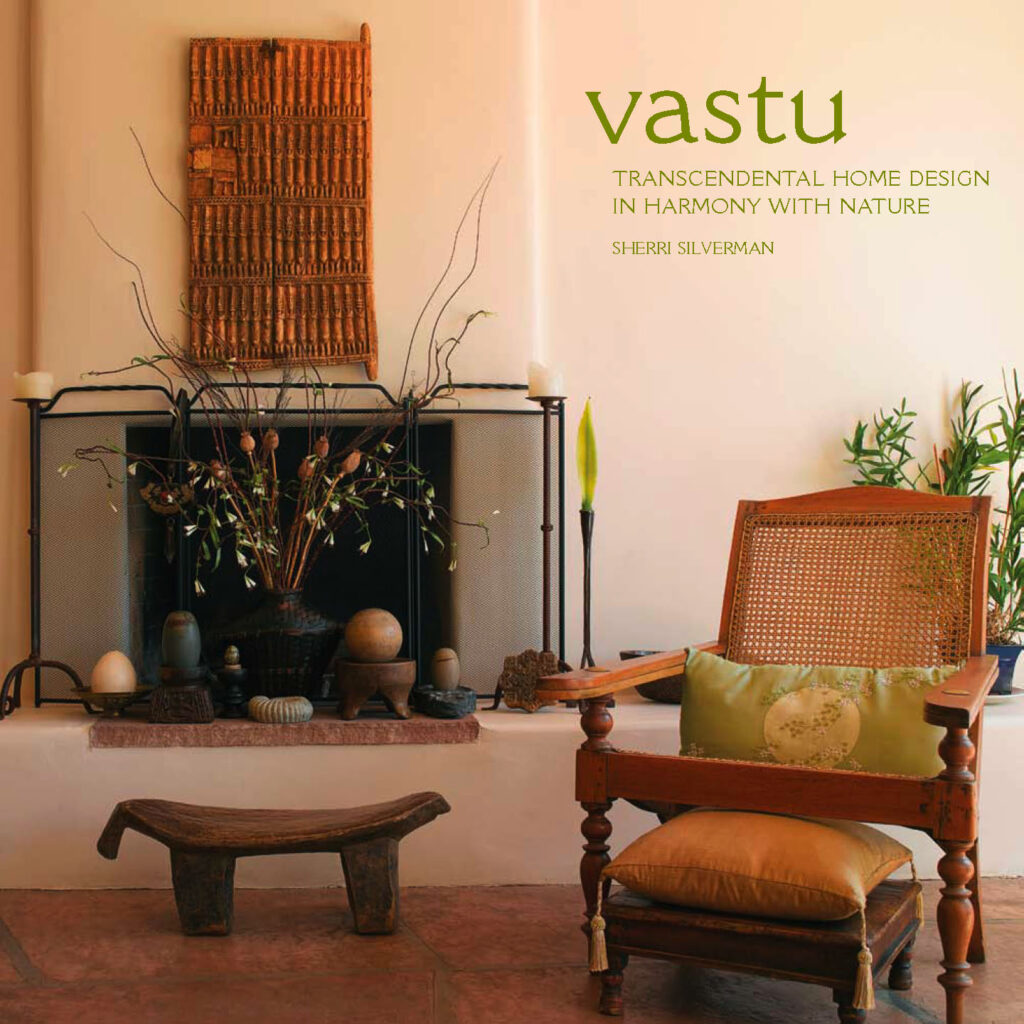
Sherri Silverman believes that Vastu is the “Yoga of Design,” with profound universal application. Based in California, USA, she carries forward this idea in her practice at Transcendence Design, offering courses and consultations to those who want to bring Vastu into their homes and daily practice. Sherri’s work lies at the intersection of arts, design, and Indian sacred sciences. Having practised Vastu for twenty-five years, Sherri has shared her learnings through her book, Vastu: Transcendental Home Design in Harmony with Nature. Through her practise, she emphasises on understanding the alignment with the laws of nature while also ensuring comfort, functionality, individuality, natural materials and beauty.
In this conversation, Sherri shares her experiences practising the arts and meditation, and their transformative impact on her energy and approach to both art and Vastu.
What led you to discover Indian wellness sciences, and why did you particularly focus on Vastu?
Meditation and yoga made such a difference in my life right from my very first experience that I took an interest in South Asian traditions in general, very little of which I had been exposed to while growing up. I learned a few principles of Vastu in the mid-1970s from Maharishi Mahesh Yogi while studying with him in Europe. Then I became very interested in Indian art, since I’m an artist, and in Jyotish and Ayurveda.
Yoga, meditation, Vastu, Ayurveda, and Jyotish are part of our universal planetary heritage, belonging to everyone everywhere. When I was working on my doctorate, I researched global sacred architecture, the concept of sacred space, and Asian systems of design. I’ve always loved houses and am sensitive to environments. I also love the fact that the concept of beauty is so central to Vastu.
How do physical spaces affect our physical and emotional wellbeing?
Any space you are in affects your brainwave activity and every other part of you physically and emotionally. Vastu is the original green design and the original neurodesign and neuroarchitecture. The laws of nature, Vastu’s guidelines, are in alignment with our greatest health, happiness, and success in life. When you violate the laws of nature, it’s as if there are more obstacles in your path that you trip on. When you honour nature, it is as if nature rises to support you and smooth your path. Vastu has the knowledge we need to lead healthier, happier lives.
Built spaces can have major violations of the laws of nature in their siting, structure, and location of rooms in the wrong places. These create negative vibrational influences on the occupants of the space. So does the type of lighting. Natural sunlight and full spectrum lightbulbs are beneficial. Most LEDs and fluorescent lighting are damaging.
Natural materials are harmonious with our minds and bodies. Synthetic substances lack prana and can be damaging in their effect.
What is the connection between Yoga and Vastu studies?
Vastu is a sister science of yoga, meditation, Ayurveda, and Jyotish. All Vedic knowledge is there for our growth and success in life. Vastu does this by creating a space that supports, nourishes, and protects the inhabitants.
The convergence among art, architecture, and Vastu is also natural. I explored this concept following my own curiosity, talents, and interests. It helps me create aligned, life-supporting spaces with beautiful, uplifting art. We spend so much time indoors, so our indoor spaces should align with the laws of nature and support the health and functioning of our brains and every level of our being.
How popular is Vastu in the US – academically and as a commercial service?
Vastu, yoga, meditation, Ayurveda, and Jyotish are all universal knowledge that belongs to and applies to everyone everywhere on the planet. I’ve been doing Vastu consultations since 1999 for clients from all over the world, mainly in the USA, since I’m based here. I have a Certified Vastu Consultant training program attended by people from many countries: the USA, Mexico, etc. I’ve given numerous Vastu presentations at the Denver Art Museum, Santa Fe Design Week, etc. Across all these engagements, I carry forward the same belief that Vastu, along with meditation, yoga are basic knowledge all humans should have!
What sets Vastu apart from Feng Shui, Wabi-Sabi, or Wu Wei? How can following Vastu benefit humanity and communities worldwide?
Vastu fulfils the intent of all these other Asian design systems and is more comprehensive and profound in its effect. Vastu creates a serene but energised sanctuary for your life. It gives greater benefits in all areas of life, including health, prosperity, happiness, relationships, and well-being.
Feng Shui is an interior design system from China, literally translated as "wind and water." Ancient China had strong traditions of geomancy and ancestor worship. Feng Shui was originally intended for the ideal placement of gravesites so people could gain the most benefit from their pleased ancestors. This developed into a system for placing buildings.
Vastu, which is thousands of years old, is actually part of the origin of Feng Shui. Emperor Ashoka of India sent scholars to teach Vastu and other wisdom traditions in Southeast and East Asia.
Like Vastu, Feng Shui's intention is to enable beneficial results in life and the healthy, unobstructed flow of ch'i, or "universal life energy," within a space. Vastu's Sanskrit name for chi, this sparkly life energy, is prana.
Despite Feng Shui's value, after careful study and research, I vastly prefer Vastu, the sacred space system of the Vedic tradition. Vastu is both spiritually and scientifically based and universally applicable. Vastu works with the subtle laws of nature that govern creation. Vastu, as the Yoga of Design, aligns buildings with universal energies: the five elements, beneficial earth energies, and cosmic forces.
Additionally, Vastu guidelines support the less well-known Chinese Taoist concept of Wu Wei. Wu Wei is based on the ability of intuitive placement that creates a good flow of energy. It is in alignment with the Tao. The Tao is the "Way," the natural order. Wu Wei advocates going with the flow of nature; it is a non-action approach of following the laws of nature. Since the Tao and pure consciousness / the source of creation / the laws of nature are simply different cultural expressions of the same universal consciousness, Vastu can help fulfil Wu Wei’s intended goals.
How would you compare Vastu with the Japanese philosophy of Wabi Sabi?
Vastu is also compatible with the goals and intentions of Wabi Sabi, the Japanese aesthetic philosophy that values elegance, beauty, serenity, simplicity, authenticity, cleanliness, a meditative quality, and appreciation of and connection with nature. Both systems view beauty as an essential component. If you follow all the rules but do not include beauty, it's not really Vastu!
The sadness and melancholy sometimes associated with wabi-sabi is not supported by Vastu, but its true underlying meaning of serenity and alignment with nature is realised even more through the application of Vastu principles.
Wabi Sabi's embrace of the impermanence of this world is a spiritual and physical truth. Vastu also acknowledges that everything is always changing, yet Vastu connects your home with the unchanging source of all manifestation. As the spiritual energy of Wabi Sabi suggests, there is no true "perfection" in this life; yet buildings designed 100% according to Vastu retain the precise perfection inherent in the laws of nature and the subtle mechanics of creation. This mathematical perfection allows us greater connection with nature and greater inner freedom and spiritual experience -- a truly authentic life -- the underlying goal of wabi-sabi. Beauty, honouring of nature, and use of natural materials are necessary ingredients of both Vastu and Wabi Sabi.
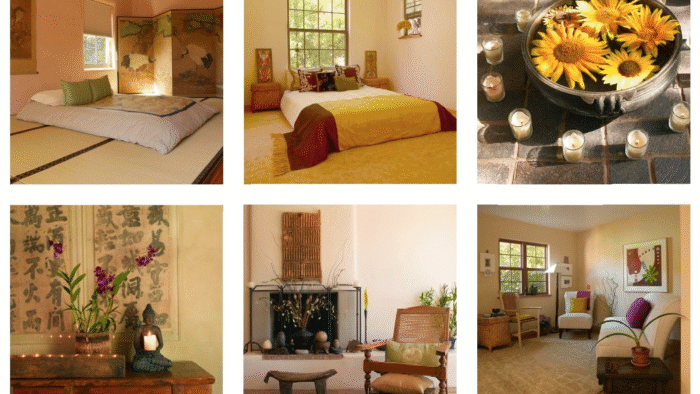
All cultures around the world value serenity, spirituality, connection to nature, and beauty. Any aesthetics, textiles, and furniture can be incorporated into a Vastu home. How you decorate your Vastu home can involve the expressive variations and "imperfections" of handmade objects revered by Wabi Sabi. My work at Transcendence Design is to help my clients discover their preferences – Japanese, Chinese or other styles – and its compliance with Vastu. Ultimately, the goal is to create greater support, abundance, success, tranquillity, and harmony in your life.